
Antibody and Dye Based Assays


Biotium MART-1 / Melan-A(M2-9E3), CF488A conjugate, 0.1mg/mL
This antibody recognizes a protein doublet of 20-22 kDa, identified as MART-1 (Melanoma Antigen Recognized by T cells 1) or Melan-A. MART-1 is a newly identified melanocyte differentiation antigen recognized by autologous cytotoxic T lymphocytes. Seven other melanoma associated antigens recognized by autologous cytotoxic T cells include MAGE-1, MAGE-3, tyrosinase, gp100, gp75, BAGE-1, and GAGE-1. Subcellular fractionation shows that MART-1 is present in melanosomes and endoplasmic reticulum. This MAb labels melanomas and other tumors showing melanocytic differentiation. It is also a useful positive-marker for angiomyolipomas. It does not stain tumor cells of epithelial, lymphoid, glial, or mesenchymal origin.Primary antibodies are available purified, or with a selection of fluorescent CF Dyes and other labels. CF Dyes offer exceptional brightness and photostability. Note: Conjugates of blue fluorescent dyes like CF405S and CF405M are not recommended for detecting low abu

Biotium CD43(84-3C1), CF488A conjugate, 0.1mg/mL
This antibody recognizes a cell surface glycoprotein of 95/115/135 kDa (depending upon the extent of glycosylation), identified as CD43 (Workshop III). 70-90% of T-cell lymphomas and from 22-37% of B-cell lymphomas express CD43. No reactivity has been observed with reactive B-cells. So a B-lineage population that co-expresses CD43 is highly likely to be a malignant lymphoma, especially a low-grade lymphoma, rather than a reactive B-cell population. When CD43 antibody is used in combination with anti-CD20, effective immunophenotyping of the lymphomas in formalin-fixed tissues can be obtained. Co-staining of a lymphoid infiltrate with anti-CD20 and anti-CD43 argues against a reactive process and favors a diagnosis of lymphoma.Primary antibodies are available purified, or with a selection of fluorescent CF Dyes and other labels. CF Dyes offer exceptional brightness and photostability. Note: Conjugates of blue fluorescent dyes like CF405S and CF405M are not recommended f
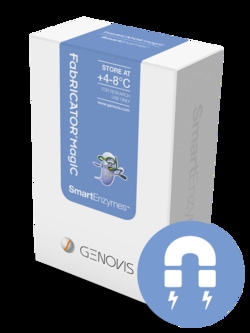
GENOVIS INC FabRICATOR MagIC | 2mL
FabRICATOR MagIC employs magnetic beads for fast automated processing of up to 96 antibodies in parallel. The popular cysteine protease FabRICATOR (IdeS) immobilized on magnetic agarose beads delivers rapid and consistent subunit generation for multiple antibodies in parallel, perfect for fast automated analysis of CQAs in a middle-level LC/MS workflow.

Biotium CD43(84-3C1), CF488A conjugate, 0.1mg/mL
This antibody recognizes a cell surface glycoprotein of 95/115/135 kDa (depending upon the extent of glycosylation), identified as CD43 (Workshop III). 70-90% of T-cell lymphomas and from 22-37% of B-cell lymphomas express CD43. No reactivity has been observed with reactive B-cells. So a B-lineage population that co-expresses CD43 is highly likely to be a malignant lymphoma, especially a low-grade lymphoma, rather than a reactive B-cell population. When CD43 antibody is used in combination with anti-CD20, effective immunophenotyping of the lymphomas in formalin-fixed tissues can be obtained. Co-staining of a lymphoid infiltrate with anti-CD20 and anti-CD43 argues against a reactive process and favors a diagnosis of lymphoma.Primary antibodies are available purified, or with a selection of fluorescent CF Dyes and other labels. CF Dyes offer exceptional brightness and photostability. Note: Conjugates of blue fluorescent dyes like CF405S and CF405M are not recommended f
Biotium CD43(DF-T1), CF488A conjugate, 0.1mg/mL
This antibody recognizes a cell surface glycoprotein of 95/115/135 kDa (depending upon the extent of glycosylation), identified as CD43 . Epitope of MAb Bra7G is clearly different from that of MAb DF-T1, called b as opposed to a for DF-T1. 70-90% of T-cell lymphomas and from 22-37% of B-cell lymphomas express CD43. No reactivity has been observed with reactive B-cells. So a B-lineage population that co-expresses CD43 is highly likely to be a malignant lymphoma, especially a low-grade lymphoma, rather than a reactive B-cell population. When CD43 antibody is used in combination with anti-CD20, effective immunophenotyping of the lymphomas in formalin-fixed tissues can be obtained. Co-staining of a lymphoid infiltrate with anti-CD20 and anti-CD43 argues against a reactive process and favors a diagnosis of lymphoma.Primary antibodies are available purified, or with a selection of fluorescent CF Dyes and other labels. CF Dyes offer exceptional brightness and photostability. Note
Biotium CD63(LAMP3/968), CF555 conjugate, 0.1mg/mL
This MAb recognizes protein of 26 kDa-60 kDa, which is identified as CD63. Its epitope is different from that of MAb LAMP3/529. The tetraspanins are integral membrane proteins expressed on cell surface and granular membranes of hematopoietic cells and are components of multi-molecular complexes with specific integrins. The tetraspanin CD63 is a lysosomal membrane glycoprotein that translocates to the plasma membrane after platelet activation. CD63 is expressed on activated platelets, monocytes and macrophages, and is weakly expressed on granulocytes, T cell and B cells. It is located on the basophilic granule membranes and on the plasma membranes of lymphocytes and granulocytes. CD63 is a member of the TM4 superfamily of leukocyte glycoproteins that includes CD9, CD37 and CD53, which contain four transmembrane regions. CD63 may play a role in phagocytic and intracellular lysosome-phagosome fusion events. CD63 deficiency is associated with Hermansky-Pudlak syndrome and is strongly
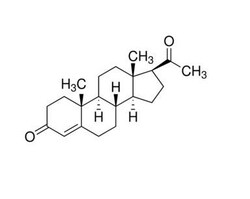
Biotium Progesterone(6-5E-10B), CF488A conjugate, 0.1mg/mL
This MAb is specific for progesterone. It exhibits minimal cross reactivity with related compounds in ELISA. It reacts with Progesterone-11a-HMS-BSA: 100%; 5-beta-Pregnane-3,20-dione: 48%; 5-alpha-Pregnane-3,20-dione: 26.4%; 17-alpha-Hydroxyprogesterone: 2.5% and 20-alpha-Hydroxyprogesterone: 0.04%. Progesterone is a steroid hormone synthesized from the cholesterol derivative, pregnenolone, in the cortex of the adrenal gland. Progesterone is secreted by the corpus luteum and acts to prepare the endometrium for the implantation of a fertilized egg. During pregnancy, it is secreted by the placenta to prevent spontaneous abortion and to stimulate the development of mammary tissue to produce milk. Thus, progesterone plays a central role in the reproductive events associated with the establishment and maintenance of pregnancy. Luteinized theca cells of normal ovary secrete progesterone. The determination of progesterone concentrations in the body fluids is of great value for endoc
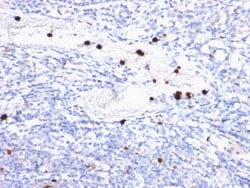
Biotium Granulocyte Marker(BM-2), CF488A conjugate, 0.1mg/mL
Recognizes 183 kDa protein with DNA-binding characteristics, which is identified as a myeloid specific antigen. It reacts with myeloid precursor cells and granulocytes in bone marrow. Its antigen appears to be restricted to M2 and M3 acute myelogenous leukemia (AML) subtypes. Markers of myeloid cells are useful in the identification of different levels of cellular differentiation. This MAb reacts with early precursor and mature forms of human myeloid cells. It is useful in the identification of myelogenous leukemias, distinguishing granulocytic sarcomas from lymphoid malignancies and also in the study of differentiation and transformation of human myeloid cells. The biological function of this antigen is not clear, although it has been proposed that it may play a role in the differentiation of myeloid cells.Primary antibodies are available purified, or with a selection of fluorescent CF Dyes and other labels. CF Dyes offer exceptional brightness and photostability. Note: C
Biotium CD55 (DAF)(143-30), CF488A conjugate, 0.1mg/mL
Recognizes a single chain glycoprotein of 70 kDa, identified as CD55 (also known as decay accelerating factor, DAF). CD55/DAF is widely expressed on cells throughout the body including leukocytes, erythrocytes, epithelium, endothelium, and fibroblasts. It is a Glycosyl phosphatidylinositol anchored (GPI-anchored) member of the membrane bound complement regulatory proteins that inhibit autologous complement cascade activation. It prevents the amplification steps of the complement cascade by interfering with the assembly of the C3-convertases, C4b2a and C3bBb, and the C5-convertase, C4b2a3b and C3bBb3b. CD55 also serves as receptor for CD97 and for echovirus and Coxsackie B virus. The MAb 143-30 can be used as marker for paroxysmal nocturnal hemoglobinuria (PNH).Primary antibodies are available purified, or with a selection of fluorescent CF Dyes and other labels. CF Dyes offer exceptional brightness and photostability. Note: Conjugates of blue fluorescent dyes like CF405
Biotium TAG-72 / CA72.4(CA72/145), CF488A conjugate, 0.1mg/mL
Recognizes an oncofetal antigen of 220 kDa, identified as a tumor-associated glycoprotein (TAG-72) with properties of a mucin. The majority of human adenocarcinomas including colorectal, pancreatic, gastric, ovarian, endometrial, mammary, and non-small cell lung cancer display some cell populations that are positive for TAG72. About 60% of carcinoma patients express TAG72 in their sera. TAG72 is reportedly useful in distinguishing pulmonary adenocarcinomas from pleural mesotheliomas.Primary antibodies are available purified, or with a selection of fluorescent CF Dyes and other labels. CF Dyes offer exceptional brightness and photostability. Note: Conjugates of blue fluorescent dyes like CF405S and CF405M are not recommended for detecting low abundance targets, because blue dyes have lower fluorescence and can give higher non-specific background than other dye colors.
Biotium CD20(109-3C2), CF488A conjugate, 0.1mg/mL
Recognizes a protein of 30-33 kDa, which is identified as CD20 (Workshop V; Code CD20.12. Workshop IV; Code B17). It recognizes an extracellular domain of CD20. It is a non-Ig differentiation antigen of B-cells and its expression is restricted to normal and neoplastic B-cells, being absent from all other leukocytes and tissues. CD20 is expressed by pre B-cells and persists during all stages of B-cell maturation but is lost upon terminal differentiation into plasma cells. The protein passes through the membrane 4 times with both ends in cytoplasm and exposes one short and one longer loop to the external environment. CD20 is not glycosylated in resting B-cells and its cytoplasmic domains are differentially phosphorylated upon activation. It acts as calcium channel involved in B cell activation and cell cycle progression.Primary antibodies are available purified, or with a selection of fluorescent CF Dyes and other labels. CF Dyes offer exceptional brightness and photostabilit

Revvity Health Sciences Inc HTRF Human MDA5 Aggregation Kit, 500 Assay Points
HTRF Human MDA5 Aggregation Kit, 500 Assay Points

Revvity Health Sciences Inc HTRF Human MDA5 Aggregation Kit, 100,000 Assay Points
HTRF Human MDA5 Aggregation Kit, 100,000 Assay Points
US Biomax Inc HEAD & NECK CANCER TISSUE ARRA
Head & Neck cancer tissue array with unmatched normal adjacent tissues